 1 month ago
39
1 month ago
39
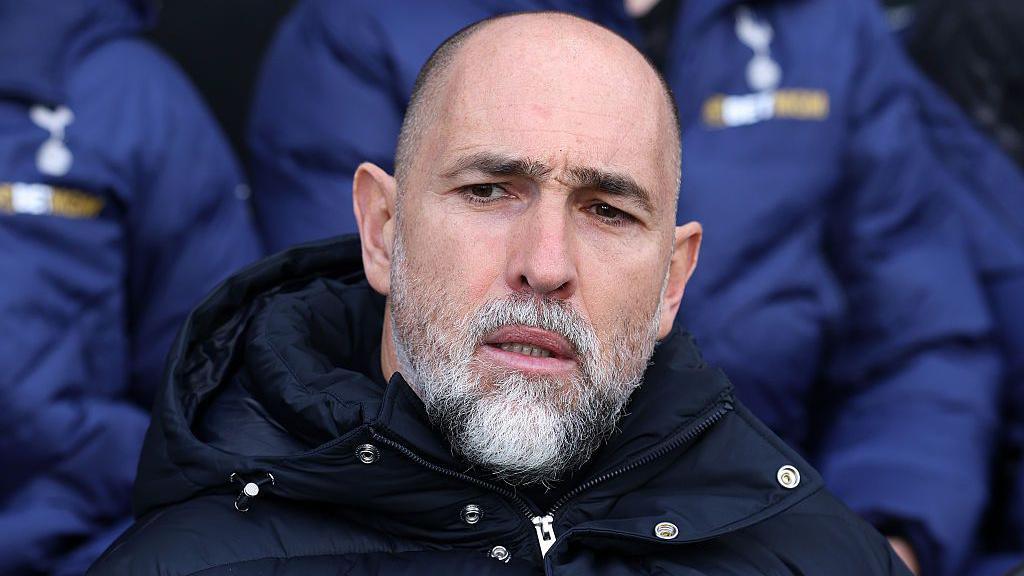 Image source, Getty Images
Tudor's Tottenham side were humbled in the 5-2 defeat at Atletico Madrid in their Champions League last-16 first leg on Tuesday
By
Football tactics correspondent
Igor Tudor was hired by Tottenham as a last-ditch attempt at surviving what would be a catastrophic relegation from the Premier League.
Despite being capable of turning the form of his previous clubs around, the firefighter coach has lost his first four games in charge, with the Champions League humiliation at Atletico Madrid a new low in Tottenham's desperate season.
Admittedly, it isn't easy to put out fires without a hose.
Between Ange Postecoglu's final season and Thomas Frank's spell this term, Spurs have been one of the worst teams domestically over a significant period of time.
Their troubles extend beyond just the coach, with injuries and recruitment clear challenges.
But the appointment of Tudor and the tactics he has used appear to have somehow made the situation worse.
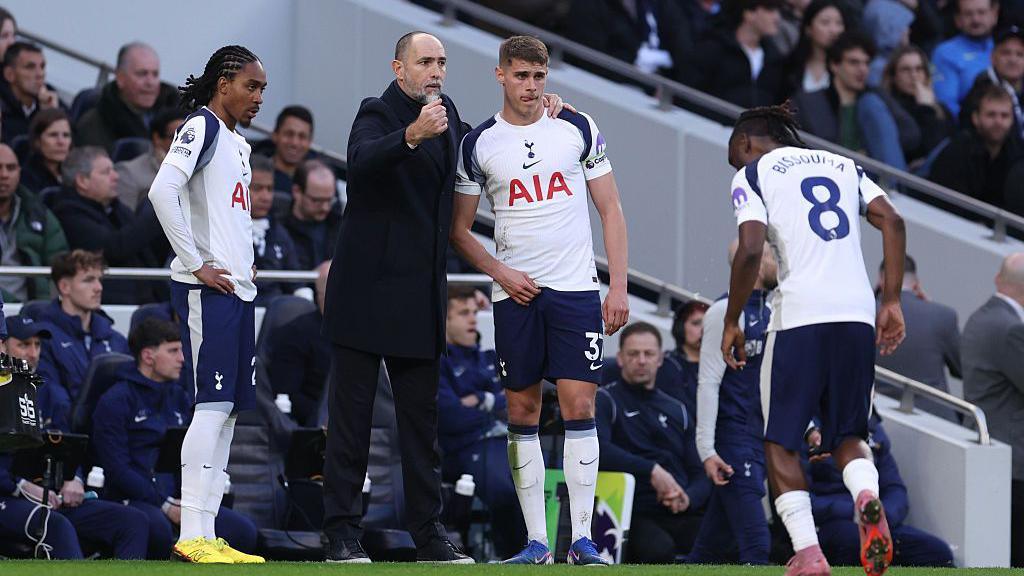 Image source, Getty Images
Against Arsenal in February, Tudor was repeatedly shouting at Spurs' captain Micky van de Ven and his defence to "push up".
A big challenge so far has been in trying to fix Spurs' approach off the ball.
Under Tudor, Spurs play in a shape that changes between a 5-2-3 and a 5-3-2 depending on whether one of the wingers drops into the midfield line.
The idea is for players to apply man-to-man pressure across the pitch, jumping from this initial defensive shape.
This was the defensive tactic Tudor has used in past jobs, looking to win the ball back high and attacking quickly.
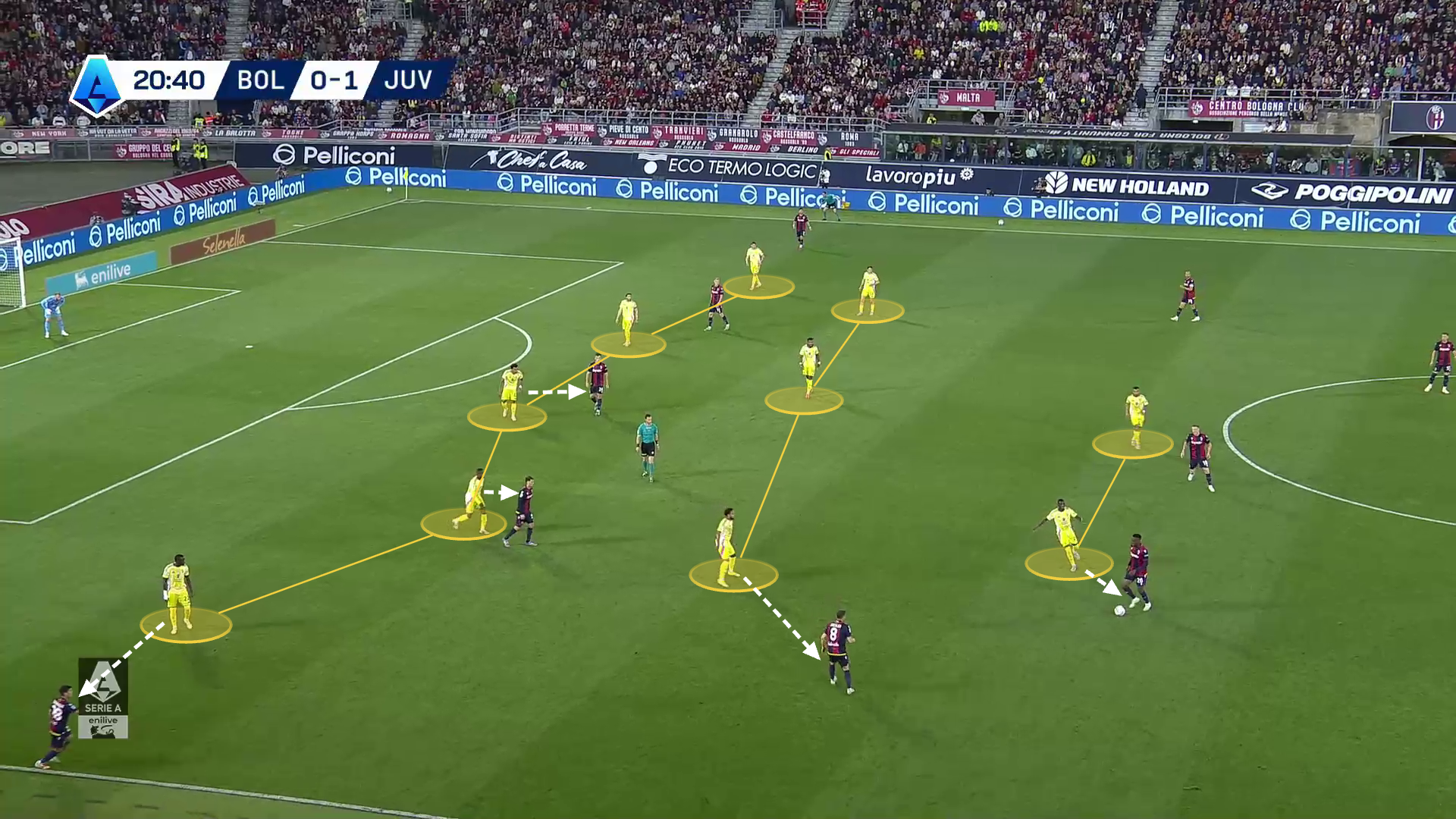
Tudor's version of Juventus set up in a similar 5-3-2 shape with man-to-man principles
In less intense leagues, an aggressive man-to-man approach can provide quick wins when the opposition are less used to the tactic, especially if they are not physically and technically able to bypass such pressure.
The money spent by Premier League sides, however, has improved the level of technical quality, which helps players escape markers through dribbling or quick one-twos. Teams have prioritised physicality in their transfer business, too.
This is in response to shifting trends in English football. In February, Pep Guardiola said the game has more "man-marking" and is "more aggressive".
As a result, teams are figuring out how to deal with this problem tactically, even if that means going long and skipping the press more often.
Why Spurs are struggling defensively
For a man-to-man press to work well, it has to be done in a co-ordinated, aggressive manner. If any player is late to apply pressure, the opposition player has time and space on the ball, essentially giving them a man advantage.
Under Frank, Spurs' defensive approach was more passive, often defending in a more rigid defensive block.
But as they lost to Arsenal in his first game in charge, Tudor was seen urging Micky van de Ven to step upfield. The Dutch centre-back and his team-mates were reluctant to do so at times – a potential hangover from Frank's style of defending.
Spurs' 5-3-2 shape lacks coverage in the wide areas with the wing-backs the only constants here.
The logic behind the 5-3-2 is that attacks through the middle of the pitch are more dangerous, so the three midfielders and two attackers are tasked with blocking this area.
When Spurs pressed from this central shape, Atletico, Fulham and Palace smartly placed players in wide and deep areas, increasing the distance Tottenham's players had to run to apply pressure.
This gave them time on the ball but also stretched Spurs' shape, out of possession, opening up gaps to exploit up-field.
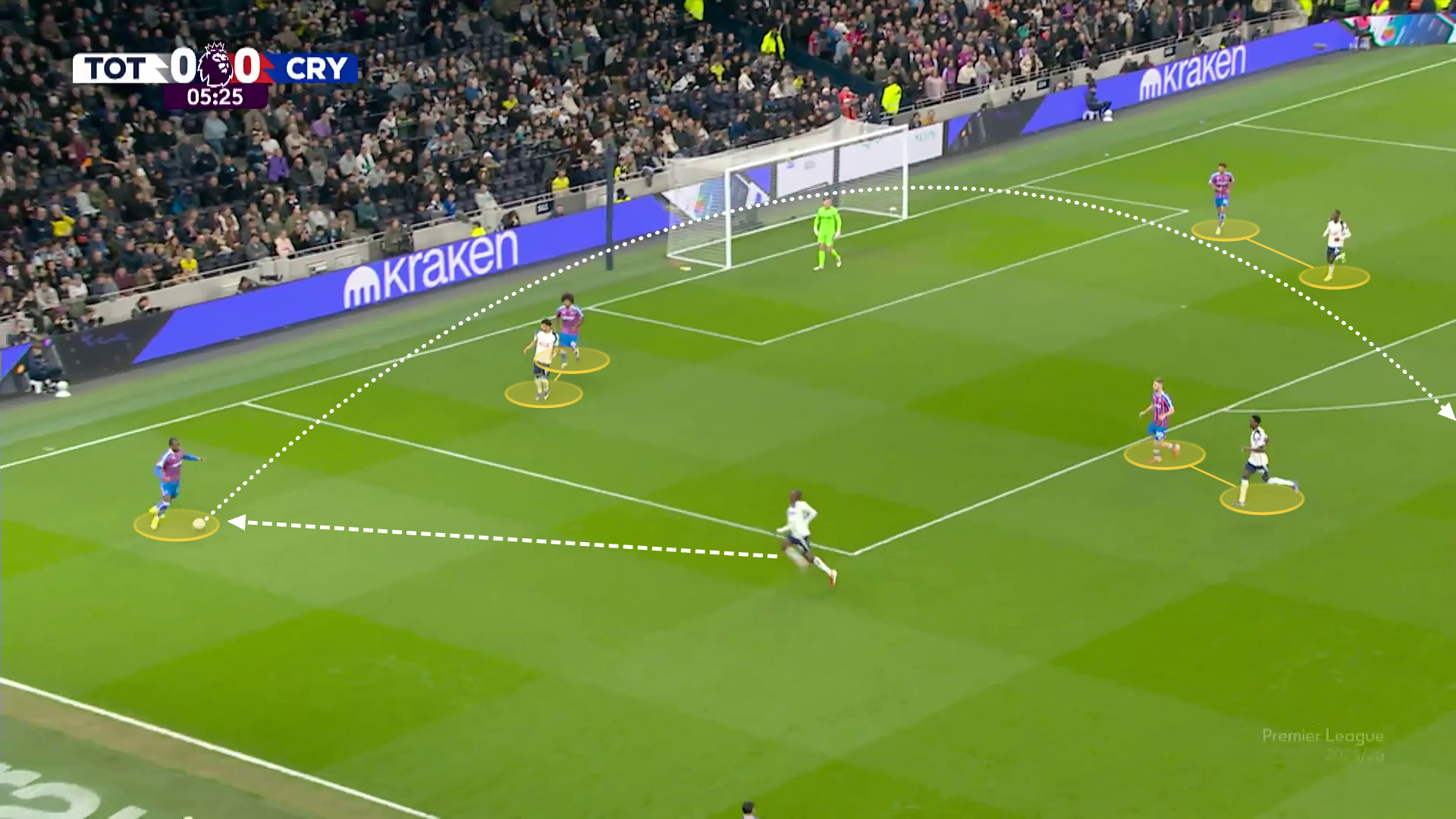 Image source, Getty Images
Palace were able to find time and space on the ball in deep areas, with Spurs taking longer to press their wide defenders
In the build-up to their second goal on Tuesday, Atletico were able to find a free man positioned deep on the right side of defence.
With Mathys Tel unable to apply pressure quickly enough, a long ball was played in behind to Marcus Llorente, running off the back of his marker.
Van de Ven slipped, which allowed Antoine Griezmann to eventually score, but the goal was created by exploiting Spurs' man-marking vulnerabilities.
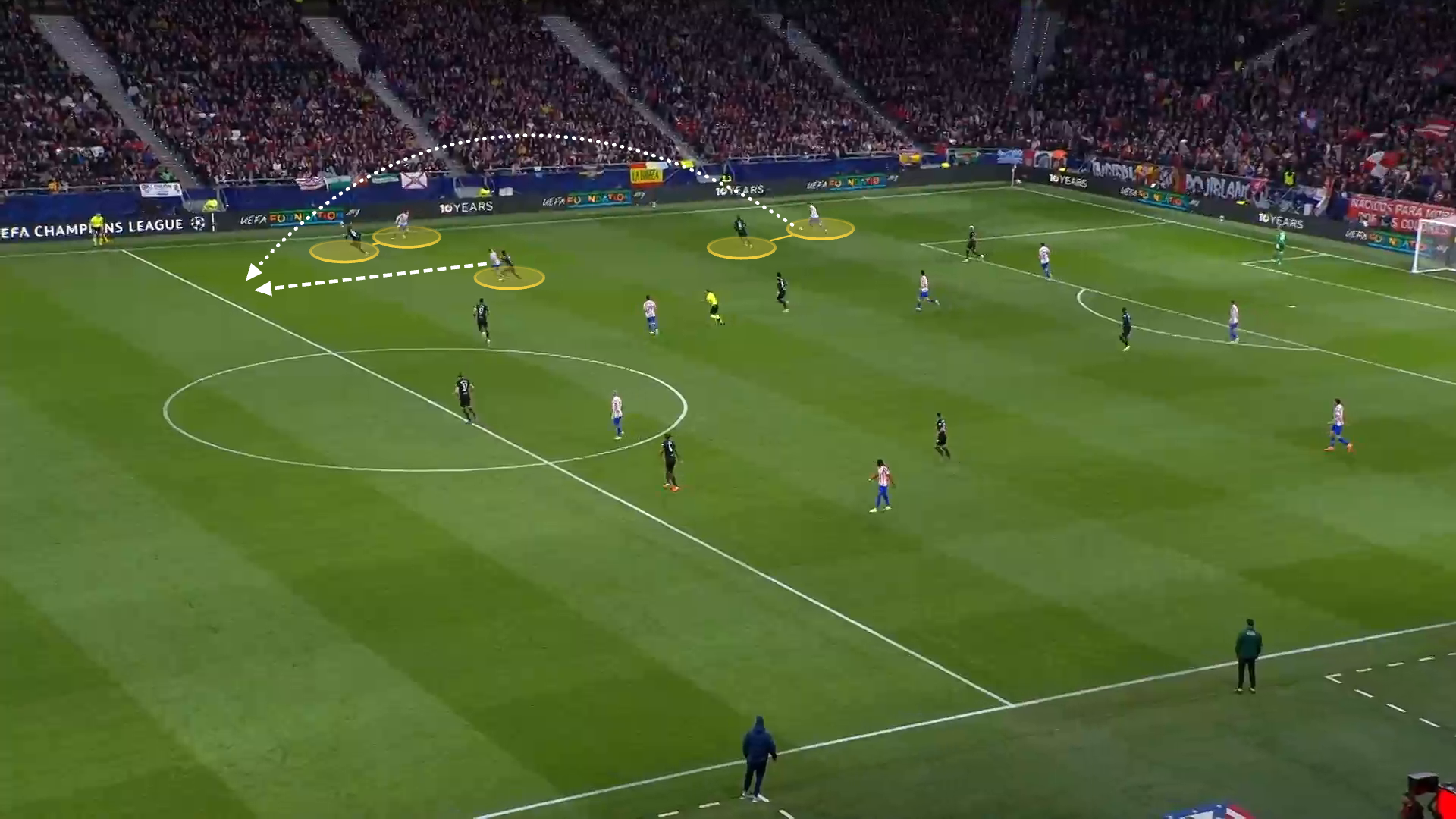
Atletico's attackers were able to run in-behind off the back of the Spurs defenders as they stepped up to mark them. Marc Pubill had the time to play a long pass into that space.
How position-less players are undoing Spurs defence
Both Fulham and Palace utilised unorthodox shapes and movement against Spurs to exploit their defensive approach.
With Tudor's side blocking the centre of the pitch, Palace were able to find their wing-backs positioned slightly deeper.
With Spurs' back five often playing in a flat line, their wing-backs took longer to go from their starting position to applying pressure, which gave time for Daniel Munoz to find Evann Guessand.
Oliver Glasner likely gave Guessand, Palace's left-sided attacking midfielder, license to roam. With Spurs' players asked to man-mark, Guessand was able to drag his marker, Joao Palhinha, to the other side of the pitch with the midfielder slow to recognise this to begin with.
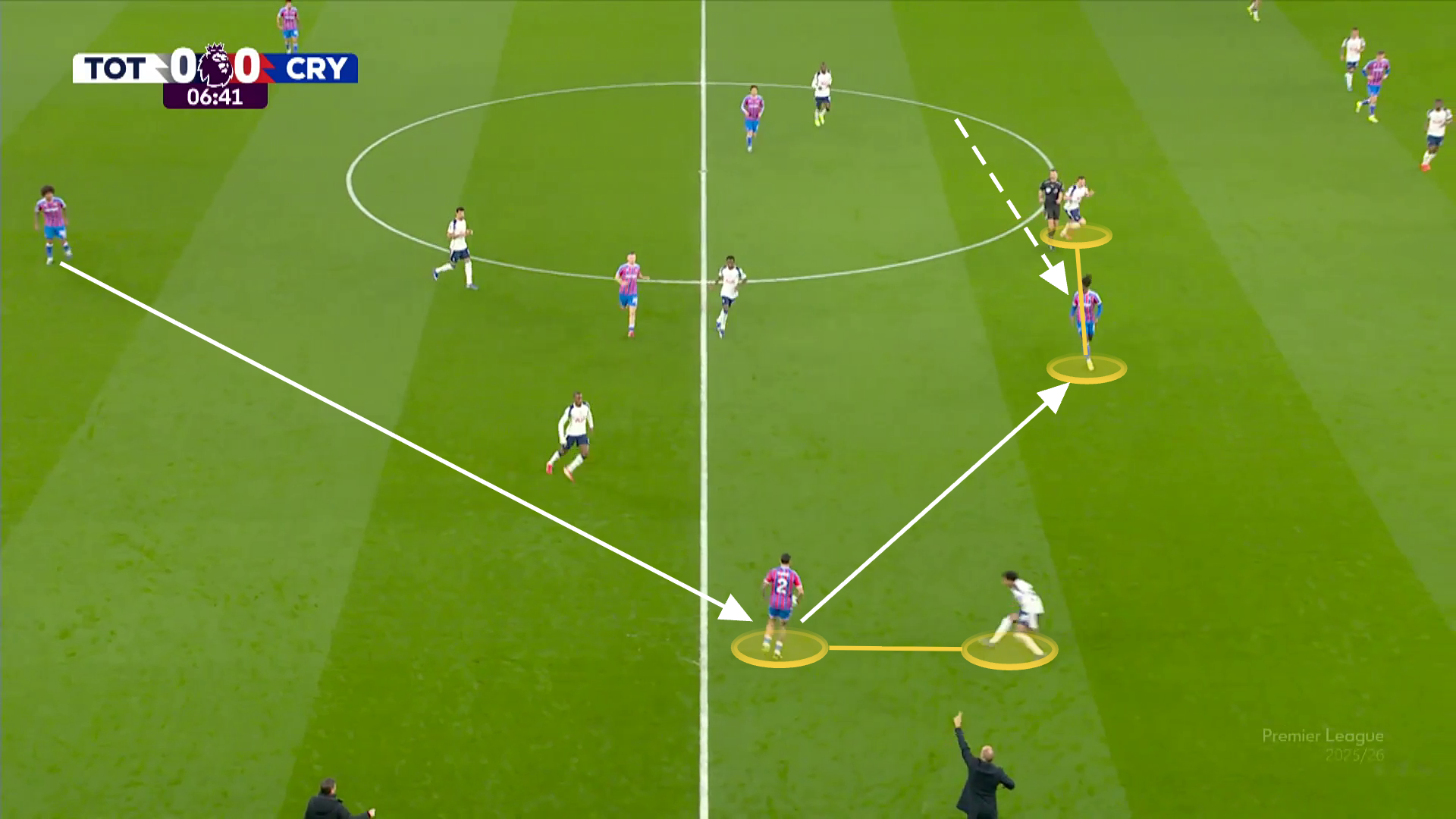
Spurs' players struggle to get close enough to press effectively. Palace play out with ease
This same freedom of movement was afforded to Fulham's players, with Alexander Iwobi moving from the left side of midfield to the right on occasion.
Palhinha began this move marking Iwobi but as space opened up at the back, he was caught between marking his man and dropping in to form the back five. In the moment, he dropped in rather than man-marking, allowing Iwobi to drive with the ball.
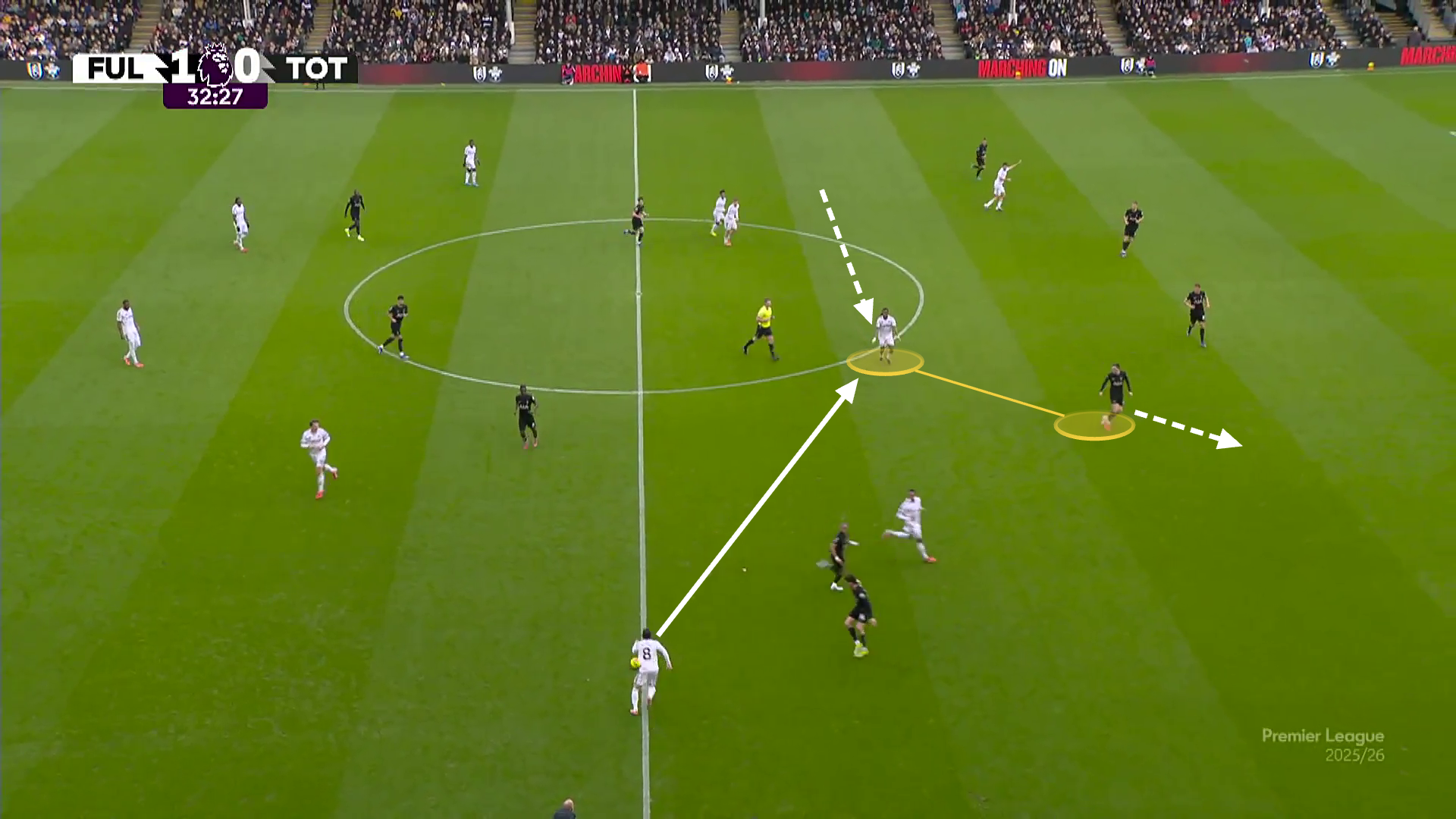
Against Spurs, Iwobi moved around the pitch in a free manner, dragging different players into zones they weren't comfortable in
Another way Spurs' implementation of Tudor's defensive tactics were countered came in the Fulham game.
In possession, Fulham played with a wide defensive line with the remaining players in attack, vacating the midfield at times.
Marco Silva's men emptied this space in order to pull the Spurs players marking them deeper.
The Fulham attackers then burst into the large space in midfield when the pass from the centre-back was on.
Spurs' midfielders were second to the ball when these 'vacate-to-arrive' movements happened as they were reacting to movements of players starting behind them.
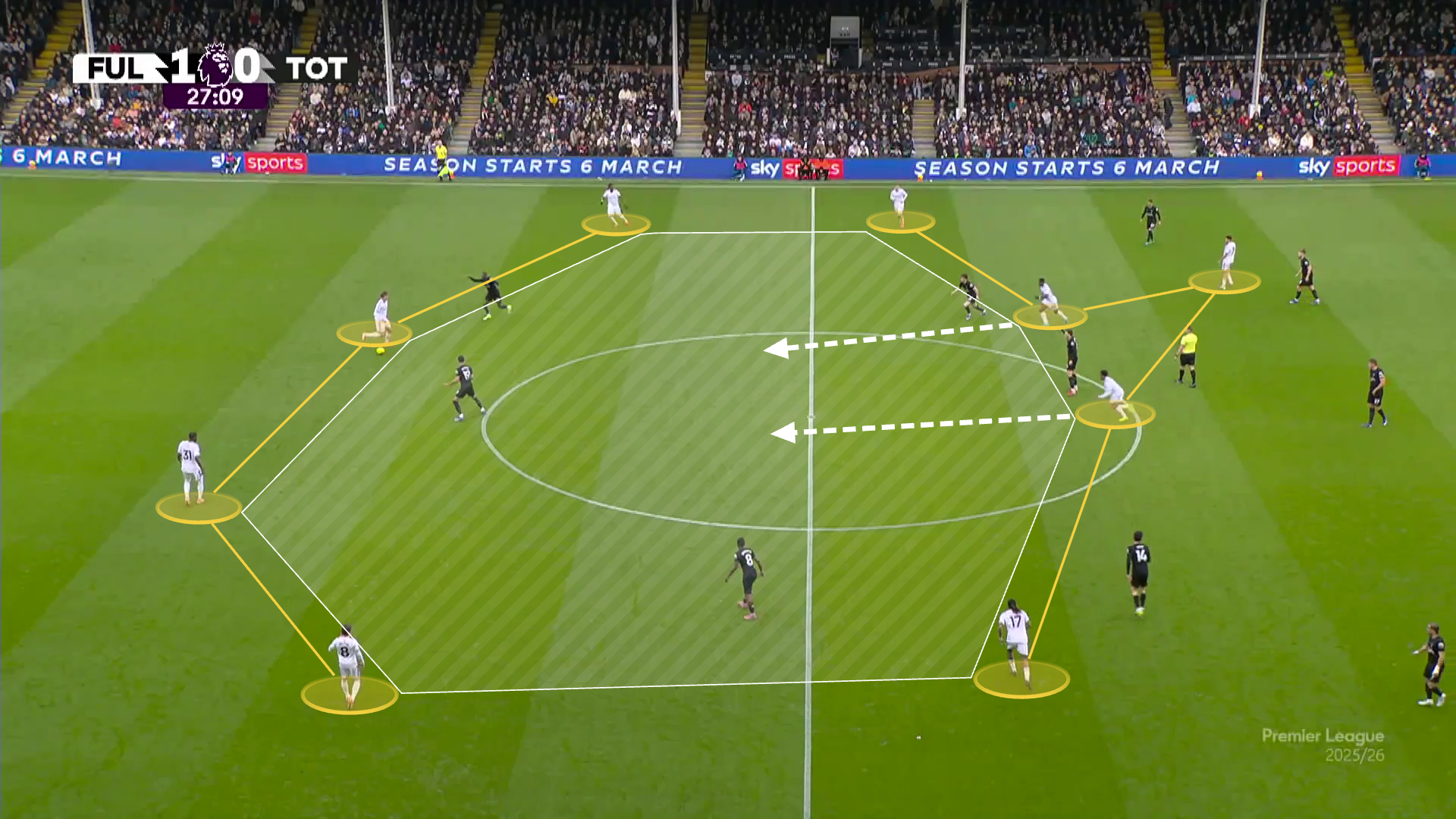
An example of Fulham's 'vacate-to-arrive' tactic that worked well to get them on the ball against Spurs
There is obviously the topic of Spurs' in-possession tactics, and the execution of them, which come with their own problems. Under Frank, Spurs built almost exclusively down the flanks, playing direct. In the Premier League this season, they sit 15th for line-breaking passes.
In the past four games, Spurs' players have been asked to take more risk in their build-up, particularly through the centre of the pitch. Although well-intentioned, it has led to turnovers which have resulted in goals.
On Tuesday both teams struggled to keep their footing on a slippy Metropolitano pitch but Spurs, and Kinsky, gifted the Spanish side two goals through trying to pass it out from the back.
With the tactical pendulum swinging so drastically from Postecoglou's short build-up to Frank's cautious and direct passing down the wing, then to Tudor's riskier build-up, it is fair to assume these changes in tactics will have contributed to Spurs' inability to execute a plan well.
Can 'good' managers be bad hires?
Prior to Tudor's appointment, there were clear principles he held throughout his managerial career. Any hiring decision therefore should have had these rigid principles in mind: the formation, an aggressive man-to-man defensive approach, unique rotations, and a willingness to attack more directly.
Coaches, like players, can be platformed correctly or incorrectly. A good example is Vincent Kompany who, correctly platformed by Bayern following a poor season with Burnley, has dominated the Bundesliga.
The club, players and environment there suit his qualities as a manager and the principles of play he uses.
Being able to predict whether the conditions at a hiring club match the principles a coach uses is a specific and incredibly valuable skill, but especially given Spurs' squad make-up, suspensions and injuries, it appears Tudor and Tottenham aren't aligned.
Prior to the Atletico Madrid game Tudor said: "Old habits need more time than you expect to change."
In the midst of a relegation battle, part of the job requirements are to work with those old habits to put points on the board now.