 1 month ago
42
1 month ago
42
 Image source, Getty Images
Brian Rolapp was speaking on the eve of the Players Championship, which starts at Sawgrass on Thursday
Promotion and relegation between different tiers of tournaments has been proposed by PGA Tour boss Brian Rolapp while unveiling his latest vision for the future of professional golf.
The Tiger Woods-chaired Future Competitions Committee, set up by Rolapp to provide a blueprint for pro golf's future, is leaning towards a two-tier tour, with players switching levels depending on the quality of their performances.
"You see this work powerfully elsewhere, including in English football, where clubs move between the Premier [League] and the Championship based on their performance," said Rolapp, who switched from the NFL to become PGA Tour CEO in June last year.
"Applying elements of that approach to the PGA Tour creates real consequence, lifting the competitive standard across the entire platform.
"For our members, the message is pretty simple: play well and you earn the opportunity to compete in our biggest events and for more money."
Rolapp suggested that the number of top-level $20m "signature events" could double. There are currently eight such competitions, including last week's Arnold Palmer Invitational at Bay Hill.
Significantly, he added that these tournaments would expand their field size to about 120 players and include a 36-hole cut.
The tour has been experimenting with much smaller fields and no halfway guillotine, a model similar to the one used on the rival breakaway LIV tour.
But Rolapp said: "This means moving away from small fields and no-cut events. Our best events will have larger fields - ideally, we are targeting something closer to 120-player fields with a cut.
"That consistency matters. It helps fans know who they will see and showcases who they want to see, the most competitive players."
He also suggested the tour's end-of-season play-off events could switch to some kind of matchplay format, but admitted all these proposals remain "a work in progress".
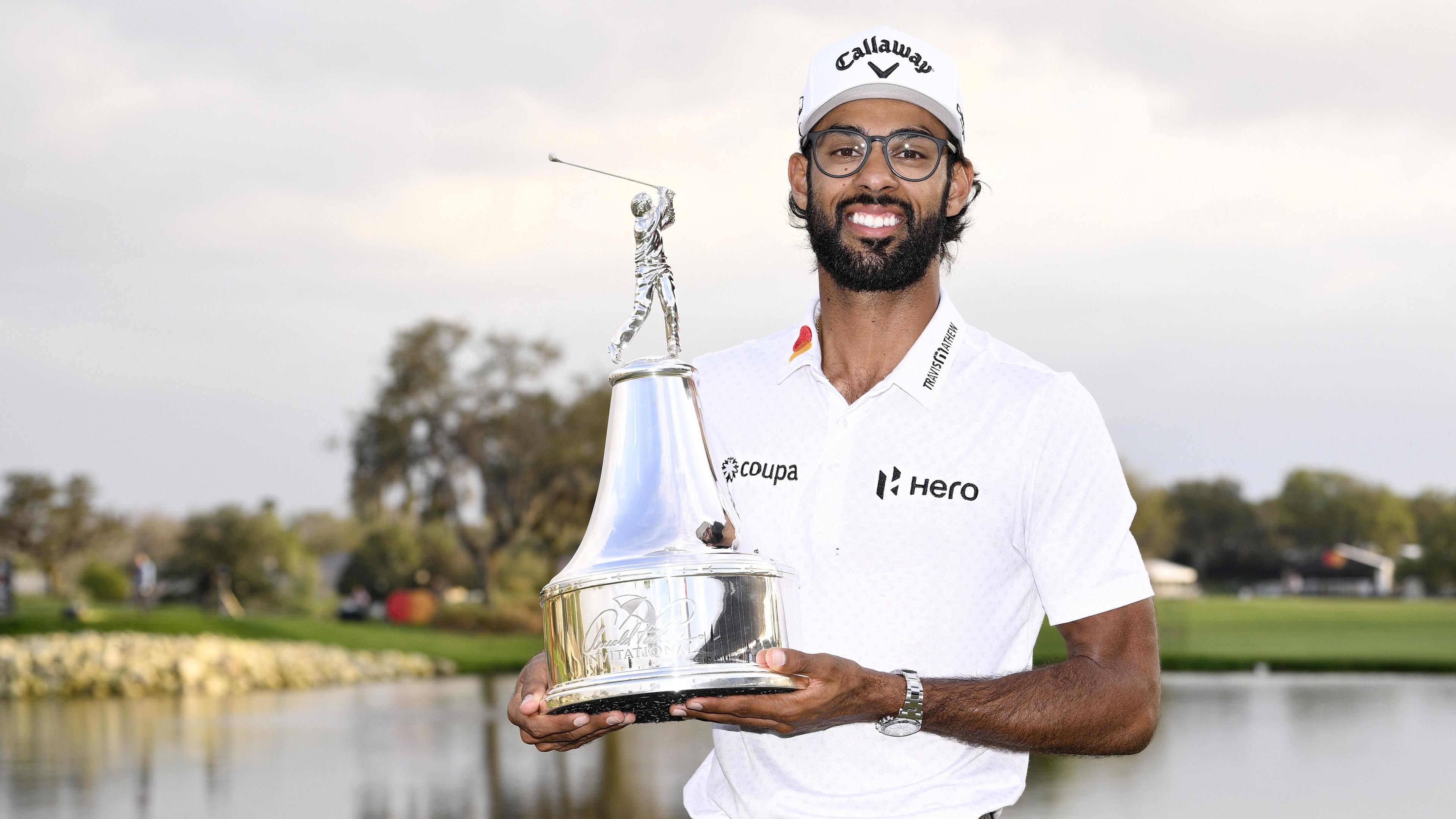 Image source, Getty Images
American Akshay Bhatia clinched a $4m (£2.98m) first prize for winning last week's Arnold Palmer Invitational - one of eight "signature events" on the PGA Tour calendar in 2026
Rolapp made no specific mention of his tour's "strategic alliance" with Europe's DP World Tour in his opening remarks. When asked, the American said: "We would like to extend that.
"In fact, we made a proposal to do that, to actually create a more mutual benefit relationship. So we hope we can do that."
Under the current arrangement, the PGA Tour helps underpin the DP World Tour's prize funds. The deal is up for review in 2027 but it is unclear whether the terms of the proposal to extend the relationship would remain as generous.
The European tour's boss, Guy Kinnings, sat in the front row for Rolapp's address and later confirmed to BBC Sport that he would like to see the partnership continue.
Rolapp was speaking not just to reporters but hundreds of PGA Tour sponsors, staff and associates. It was held in the huge atrium of the circuit's grandly titled "Global Home" office complex.
The 53-year-old is one of America's most highly respected sports executives. But the substance of his message struggled to fit the grandeur of the occasion.
This might suggest "significant change" is taking longer than he might have envisaged.
But that is the challenge of trying to satisfy many constituents, including PGA Tour members at differing levels of the game, as well as long-standing tournament sponsors and broadcast partners.
Rolapp spoke of wanting to be "transparent" but refused to say how a $1.5bn (£1.1bn) investment by the powerful Strategic Sports Group might be utilised.
Inevitably, though, it will funnel into supporting what the new boss sees as vital change.
"The US [sports] media market and rights fees is $30bn (£22.4bn)," said Rolapp, who spent 22 years at the NFL.
"Currently the NFL is $12bn of that. They have made their public intentions clear; they would like to double that.
"So if you start doing that math and you're anyone other than the National Football League, you start to ask yourself the questions.
"Next time I go to the media market, how do I make sure I have the most compelling product for fans and for our media partners so that we can compete in what is a very complicated media ecosystem?"
Rolapp added: "If you are in the sports business, it behooves you to put your house in order as much as possible.
"That is a significant part of the work that the Future Competition Committee is doing and it's one of the reasons why it's so important."