 1 month ago
43
1 month ago
43
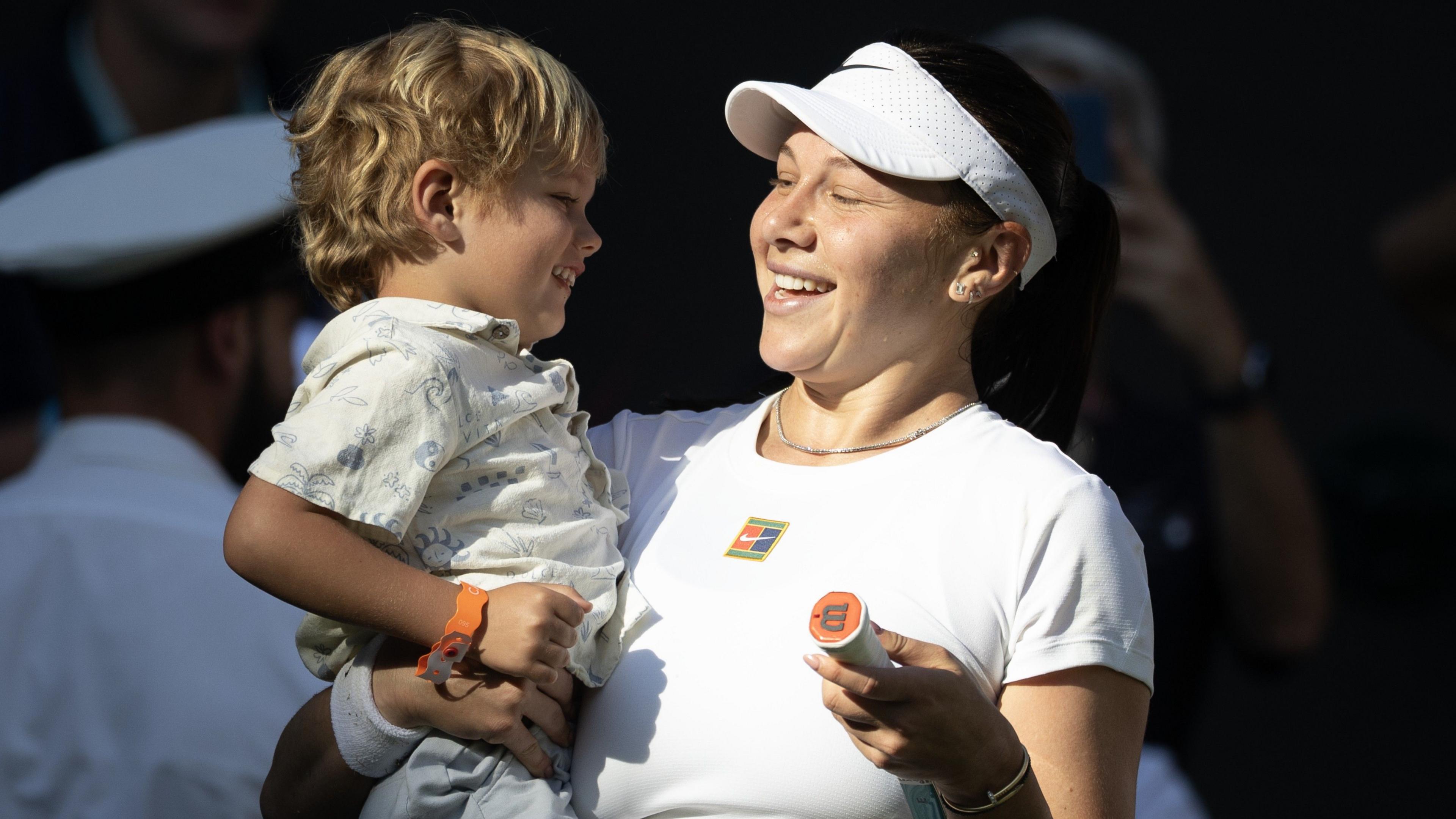 Image source, Getty Images
Amanda Anisimova's nephew, Jackson, was a courtside regular during her Wimbledon run
Amanda Anisimova will arrive at Wimbledon this year with plenty of good memories - but also in the hope she can "rewrite the story" with a much happier ending.
Twelve months ago, Anisimova won a compelling two-and-a-half hour tussle in the semi-finals with world number one Aryna Sabalenka to reach a first Grand Slam final.
But just two days later she failed to win a single game in the showpiece against Iga Swiatek, losing 6-0 6-0 in only 57 minutes - a scoreline that had not been seen in a Wimbledon ladies' singles final since 1911.
"I got a bit frozen with my nerves," was how Anisimova put it, before predicting she would be stronger for the experience.
Many watching her evident and unsettling discomfort on Centre Court - and the tears as she thanked her family after the match - may have wondered how long that would take.
About six weeks was the answer.
At the very next Grand Slam - the US Open in New York - Anisimova exacted her revenge on Swiatek in the quarter-finals, before beating two-time winner Naomi Osaka to reach a second successive major final.
"Being able to manage my nerves and go out there and try to forget the past [after a] very quick turn around - that was the biggest mental challenge I had to overcome," Anisimova, 24, told BBC Sport at Indian Wells in March.
"I was also enjoying it out there. I felt like once I went out there I didn't have the stress or any weight on my shoulders - maybe because I had a lot of people supporting me."
Anisimova returns to Wimbledon this week after a difficult year in which she has parted ways with her coach and missed two months of the clay season with a left wrist injury.
"I'm going into this just excited to play and be healthy again," she said at Queen's, where she lost in the quarter-finals.
From 'worst off day' ever to another Slam final
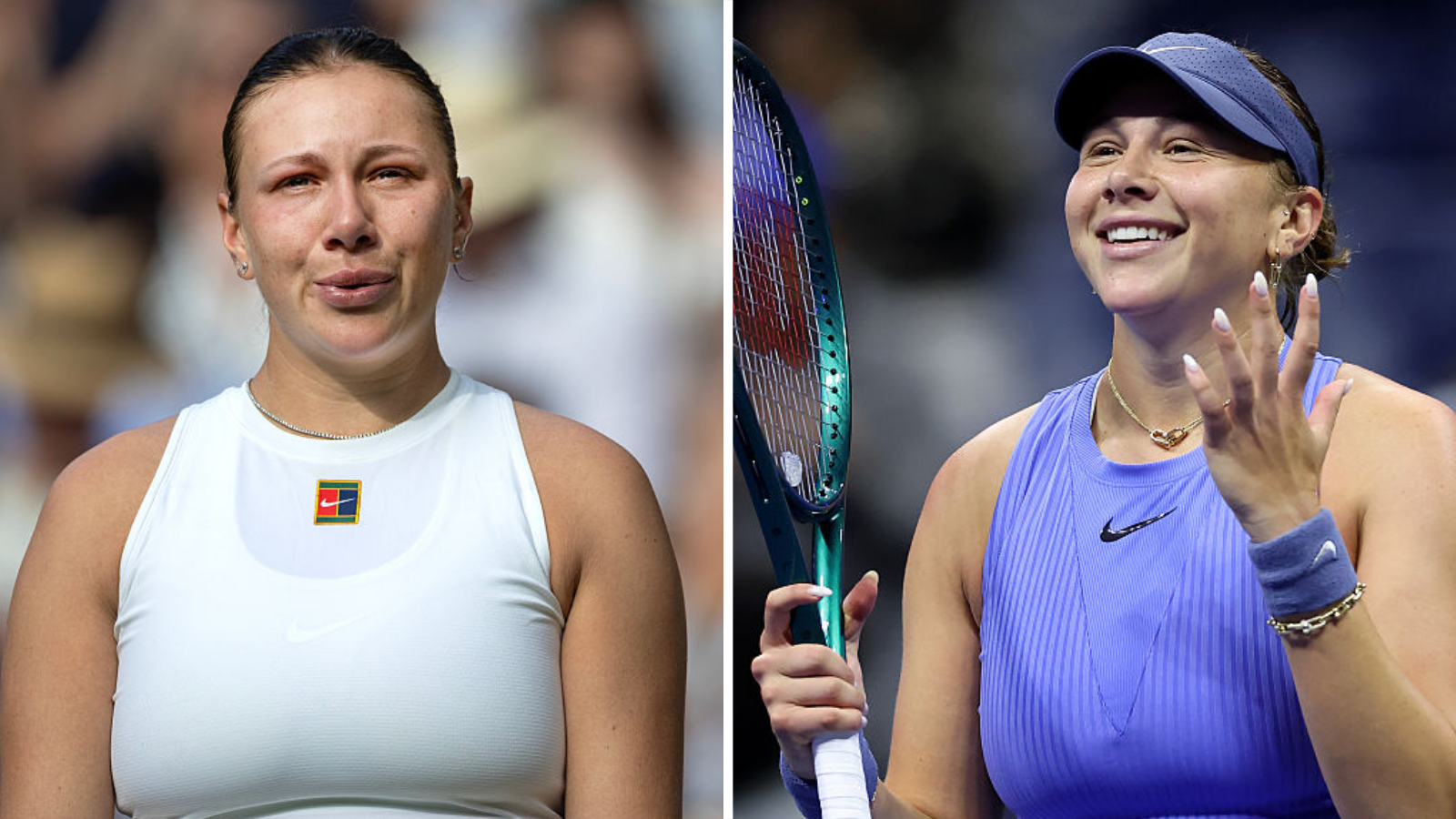 Image source, Getty Images
Anisimova was more competitive in her second Grand Slam final against Aryna Sabalenka at the US Open
At her best, Anisimova is a powerful, aggressive player who tries to strike first in a rally.
In recent months, she has shown a greater ability to construct a winning point.
Britain's Emma Raducanu has played her four times in the past eighteen months, beating her friend in Melbourne and Miami last year before finding herself on the wrong end of the scoreline when they met in Montreal last August and again at this year's Indian Wells.
"The way she has been competing for the past year, even when things don't go her way, made a difference," Raducanu said in California.
"Everybody knew she was dangerous and could take the racquet out of anyone's hand, but I think her focus and competitiveness has made a big difference."
Former coach Rick Vleeshouwers had only been working with Anisimova for a year heading into last summer.
The Dutchman usually prefers to watch a match back in full before a debrief the following morning, but the conversation that followed the Wimbledon final was one of his easiest.
"Right after I told her: I didn't see Amanda today," he told BBC Sport before their split in March.
"She was so different than all the days before. Physically and mentally she was just not there.
"For me it was easy to dissect. This was the worst off day we have ever experienced."
Vleeshouwers told her they would hear about the Wimbledon final "for two weeks, three weeks, maybe a month - and then it will fade".
Newcomers now more welcome, and Sabalenka sets the tone
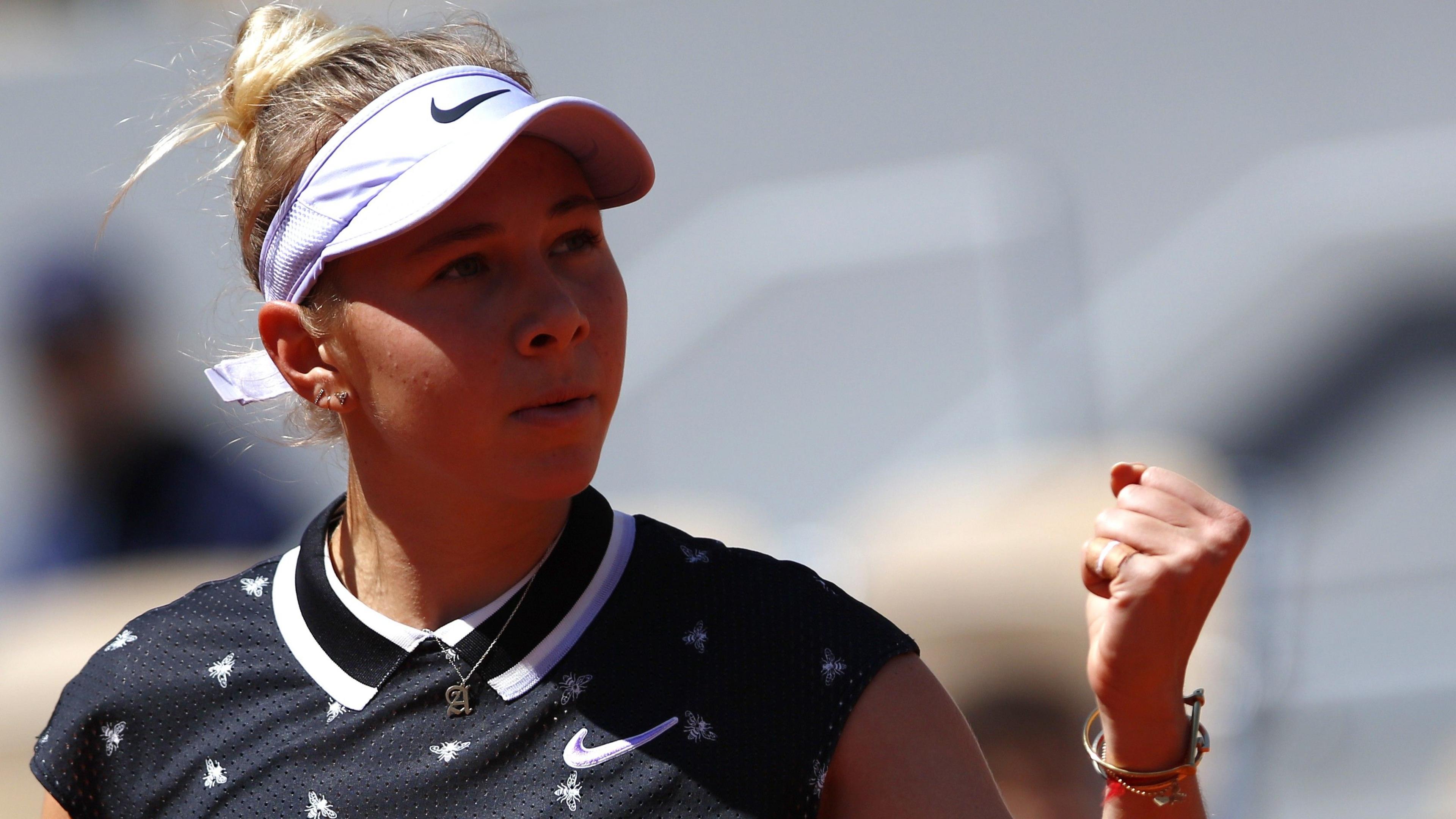 Image source, Getty Images
Anisimova beat Aryna Sabalenka and Simona Halep on her run to the 2019 French Open semi-finals
Anisimova was long tipped for major success.
She started playing aged five and turned professional as a 15-year-old in 2016. A year later, Anisimova beat a 13-year-old Coco Gauff to win the 2017 US Open girls' title.
She reached the 2019 French Open semi-finals aged 17, ousting defending champion Simona Halep along the way to become the first woman born in the 21st century to reach a major singles semi-final.
Fewer than three months later she suffered the terrible loss of her father and coach Konstantin.
"A lot of life experiences have made me grow up very quickly, especially it being such an independent sport," she said.
"You quickly learn a lot of things and how to handle a lot of stressful situations on your own.
"I feel like I'm not my current age - I feel I'm a lot older than I am, although I do like acting like a kid and having my inner child come out sometimes."
Anisimova's transition from the junior to the senior tour was not easy. She credits fellow American Sloane Stephens - who won the US Open title the same year Anisimova won the junior event - for making her feel welcome, but says otherwise there was little maternal instinct shown by older players.
"I love the direction the players are going in when it comes to the social environment and easing that tension when we are off the court," Anisimova explained.
"I would say it's a great environment now: we socialise, we talk. But when I first came on to the tour it was still a bit tense.
"There were a few players I talked to who made me feel seen and involved, but it was definitely very interesting, especially coming from the juniors.
"I love the older players who treat the new ones coming on with respect and make them feel welcome, because it is kind of scary when you are entering a new career.
"I'd say more of the top players have normalised that. Aryna [Sabalenka] is doing a great job of that, being very social and welcoming with a lot of the players."
Self-care days vital to continued success
Anisimova spoke openly about her 2023 break from tennis both before and during her Wimbledon run.
With just two wins in the first four months of that year, the American left Madrid in late April and did not return to the WTA Tour until the following January.
Her mental health was suffering and it was time to "breathe and live a normal life for a bit".
Having fun and making time for breaks is still vital to her now.
"I'm someone who struggles doing the same exact thing every day," she said.
"I love just doing something different if I need to take a self-care day where there's no tennis.
"If I need a lighter day for my mental recovery then I'll take it, because for me it's just as important as my physical health."
Anisimova has one more year left of her business and psychology degree, which she studied in person for in Florida for a semester during her break.
She also threw herself into painting and sold some of her work for charity.
"I really want to get back into it," she continued.
"It's such a good mindfulness thing. That's the reason why I started it - to be away from everything for three hours, get my hands dirty, not be able to look at my phone or pay attention to anything else."
As the world number six and a two-time Grand Slam finalist, there may well be many major titles in Anisimova's future - but not medical school, which was an ambition of hers when she first joined the professional ranks.
"Something I grew up wanting to do if tennis didn't work out was to become a doctor, preferably a surgeon," Anisimova said.
"It's unfortunately not very realistic for me any more. Maybe fortunately because I love the career I have.
"Science and the medical field has always interested me, but right now I feel like I've stressed myself out too much with tennis - I don't think I could go through med school."
While last year's final may not be her favourite memory, Anisimova is hoping to use that experience for another successful run at Wimbledon.
"Wimbledon is Wimbledon. I'll always love coming back," she added.
"I have great memories from it, hoping to maybe rewrite the story in a more positive way and hopefully go all the way at some point in my career."