 2 hours ago
1
2 hours ago
1
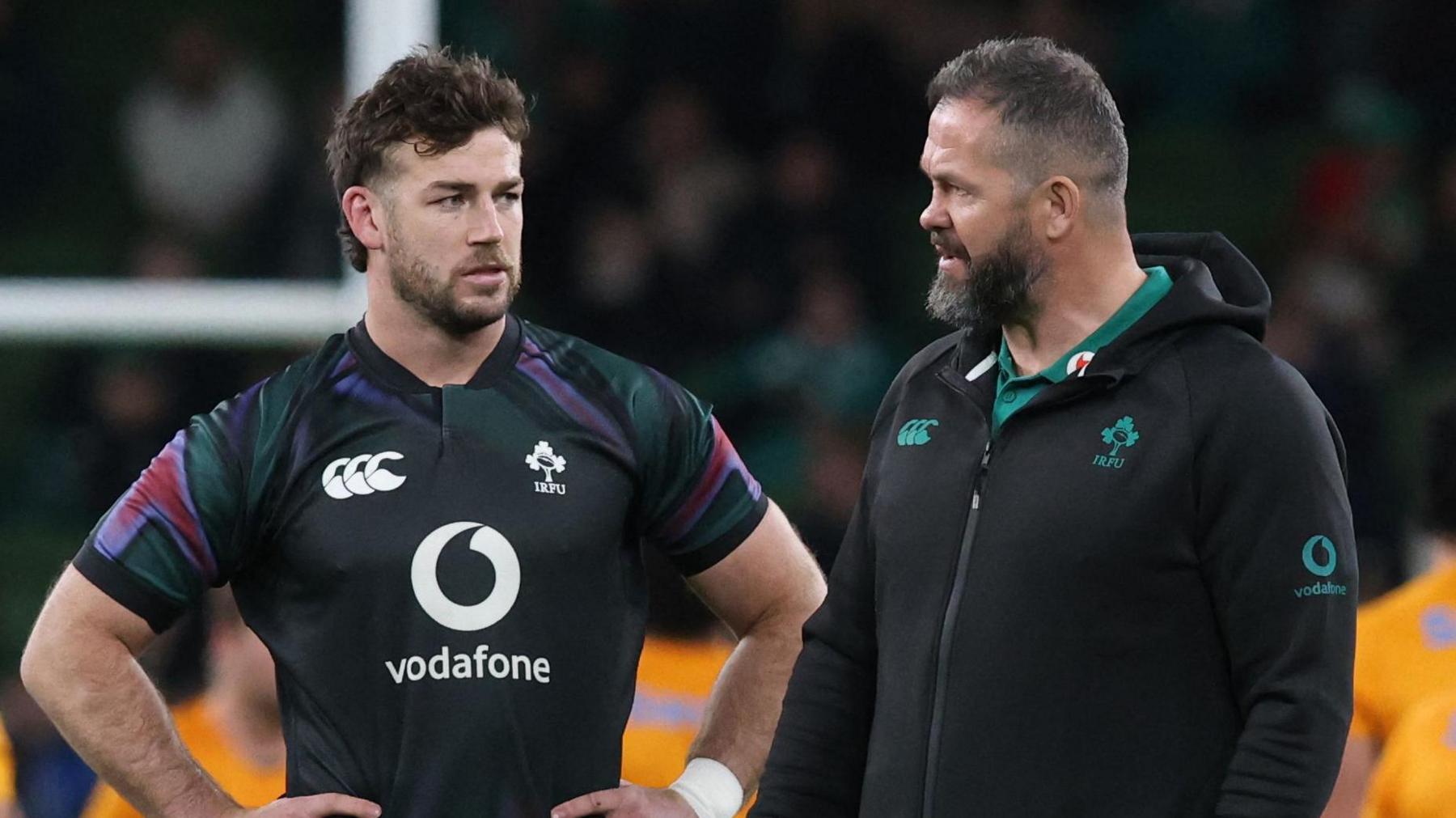 Image source, Getty Images
Ireland fell to fourth in the world rankings during 2025
ByJonathan Bradley
BBC Sport NI senior journalist
The year 2025 was one that asked plenty of questions of Andy Farrell's Ireland team. Will 2026 provide the answers?
Throughout their tortured World Cup history and failed efforts to reach that first ever semi-final, the team has been accused of all too frequently peaking at the midway point of the four-year-cycle.
Nobody, though, will be making that claim this time around.
After another quarter-final defeat in Paris two years ago - on this occasion a heartbreaker against New Zealand with arguably the finest side Ireland has ever sent to the showpiece tournament - there has been a moderate but undeniable decline.
In 2024, Ireland still won the Six Nations, the magnitude of that achievement not lost on anyone old enough to remember the 24-year wait for such a title between 1985 and 2009.
However, there was undeniably a lingering concern over how they left a Grand Slam behind them with defeat by England in Twickenham.
A split series in South Africa that summer was, again, not a poor return in isolation but, with hindsight, it feels increasingly important that the manner of the loss was decidedly more emphatic than that of the win.
Their November campaign began with a muddled performance against the All Blacks and it felt as if the side never truly regained their rhythm.
The same, perhaps, could be said of 2025 as a whole.
Opening with a pair of Six Nations wins over England and Scotland augured well, but they were decisively beaten by France at home either side of laboured away wins over Wales and Italy.
A summer tour without the sizeable contingent of both players and coaches away with the British and Irish Lions in Australia offered little insight or measure of progress, while losses to New Zealand and South Africa when back to a full complement in November only heightened the fear that, having slipped from their 2023 peak, the gap is widening between Ireland and the very best.
How Farrell and co. go about attempting to ensure that crack does not become a crevice will be the dominant storyline of 2026.
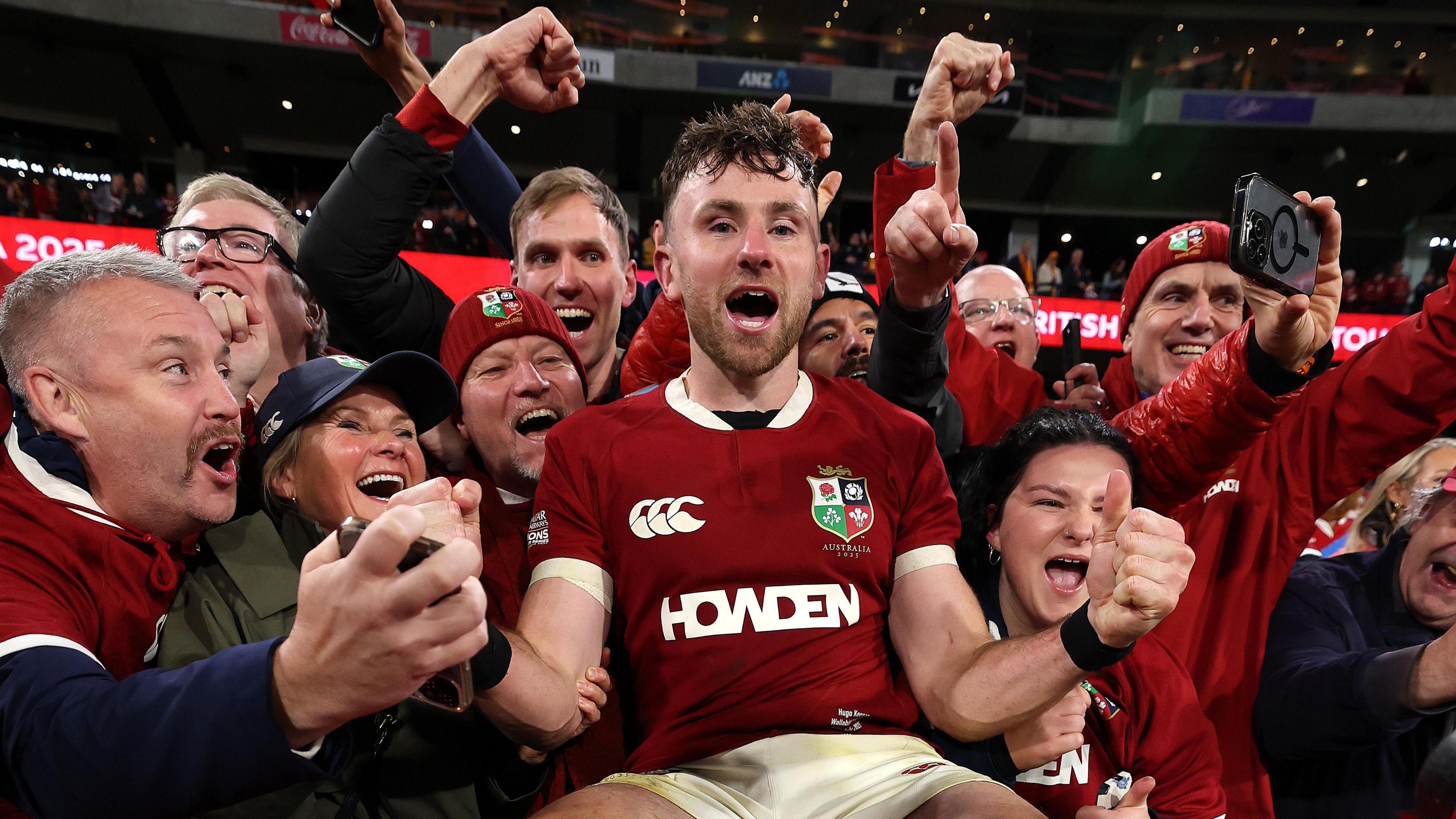 Image source, Getty Images
Hugo Keenan scored the winning try in the British and Irish Lions' second Test victory over Australia last summer
Perhaps the most dispiriting aspect of those home defeats by France and South Africa was how Ireland felt simply overpowered by both, in contact and, against the latter especially, at the scrum.
The nature of those losses has only heightened concerns over the squad's age-profile.
Fifteen of the players called up by Farrell for November are the other side of 30-years-old, while a further four will be by the time of the 2027 World Cup.
Munster forwards Edwin Edogbo and Brian Gleeson, as well as Ulster centre Jude Postlethwaite, are all uncapped and would offer both new blood and physicality come the 2026 Six Nations.
Leinster props Paddy McCarthy and Tom Clarkson, and the fit-again Ulster lock Cormac Izuchukwu, already have international experience but greater exposure for the trio would also fit the profile for a campaign that feels a tipping point in the build-up to Australia 2027.
Ireland are not prone to throwing the baby out with the bathwater, though.
Will Farrell freshen up a largely settled matchday squad with such promising but untested players or continue to rely upon those possessing such credit in the bank with a coach who will mark a decade on the Irish ticket in 2026?
How some of those experienced campaigners shift what has felt like a Lions hangover is an intriguing subplot.
There is more to it, however, than simply personnel.
Given the physical profile of their squad even through what has been a golden era across the past decade and a half, Ireland have become used to having to box clever to enjoy their historic successes.
But, while lengthy phase-play was once their calling card, changing interpretations of the defensive breakdown have rendered that part of their game as less effective than before.
Whoever Farrell selects, and whatever the average age of the squad moving forward, there is a sense that one of the keenest coaching minds in the game will be relied upon to tweak the gameplan too.
How can Bemand's side build on World Cup journey?
If Andy Farrell's side are looking to garner some momentum in the build-up to a World Cup, 2026 will see the Ireland women seeking to harness the impetus generated from their own global showpiece.
Ireland's rebuild from the nadir of their World Cup qualifying failure in 2021 really took flight in 2024, when a third-place finish in the Six Nations ensured promotion to the top-tier of WXV.
Once there, they showed they belonged with the best by beating New Zealand in Vancouver. Another third place in the 2025 Six Nations did not feel quite the achievement of the past year, especially given the campaign ended with a gut-punch defeat by Scotland in Edinburgh.
Having missed out on the previous World Cup, their showings in England were considered around par with wins over Japan and Spain, but a pool-stage defeat by the Black Ferns and subsequent quarter-final loss to France.
On another day they could have battled past Les Bleus in horrible conditions at Sandy Park but instead missed out on the becoming the first Irish senior side to win a last-eight tie at the tournament despite holding a 13-0 lead.
Off the field, however, the World Cup represented a real reconnection between the team and the Irish public.
From viral social media videos to the 'release the fleece' campaign, an engaging squad achieved real cut through even in non-rugby circles with interest around games seeming to mushroom in tandem.
Building on such good feeling on and off the pitch will be key over the next 12 months.
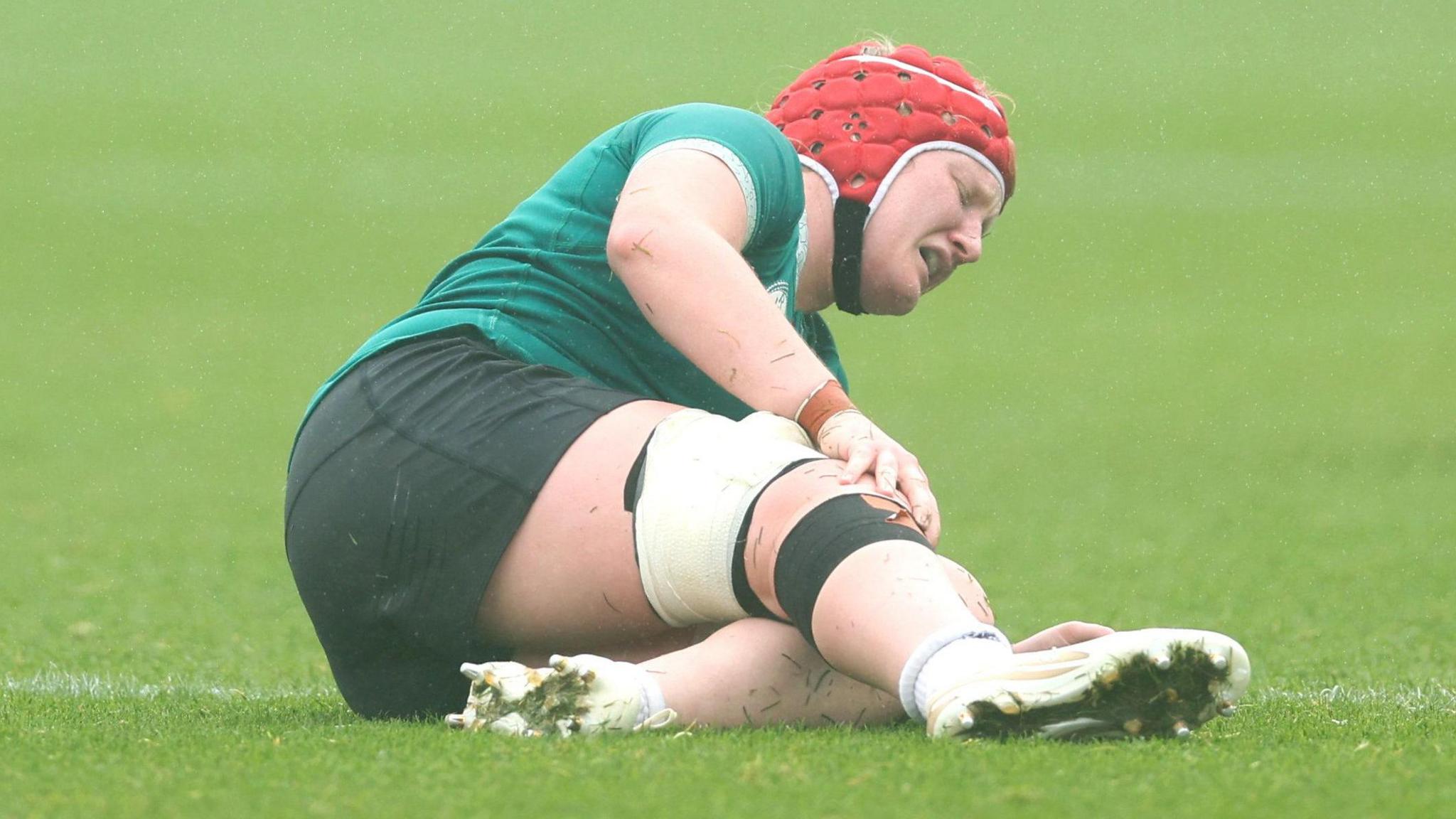 Image source, Getty Images
Aoife Wafer is fit again after an injury-marred 2025
Historic Aviva Stadium fixture in the offing
It is already confirmed that 2026 will bring a historic standalone fixture at the Aviva Stadium when Scotland are in Dublin for the final round of the Six Nations in May.
With Italy in Galway and Wales in Belfast before that, Scott Bemand's side will surely be targeting a three-win campaign for the first time since 2020.
A restructured WXV competition with a first Test window starting in the autumn provides a new challenge too.
How Ireland's top players are prepared for those campaigns will continue to be of keen interest in the early months of 2026.
For home-based players, the Celtic Challenge continues to be used as a way to get ready for the Six Nations, although it will be hoped between now and March to see more competitive matches than in recent iterations of the championship.
Increasingly, though, there is a real Irish presence in the Premiership Women's Rugby too. Star back row Aoife Wafer made her Harlequins bow this month, while key forwards Brittany Hogan and Niamh O'Dowd will debut for Sale and Gloucester-Hartpury in the new year.
The hope will be that all three can take their games to new levels in 2026 and in turn the national side can do the same.