
Nate TaylorApr 16, 2026, 06:00 AM ET
KANSAS CITY, Mo. -- One of the most significant discussions in the Kansas City Chiefs' history occurred almost 10 years ago in their draft room -- and Ryne Nutt can recount every detail.
"There was a big argument," said Nutt, an area scout at the time and the Chiefs' current vice president of player personnel.
The source of the debate was a defensive tackle out of Mississippi State named Chris Jones.
"[Some] people had reservations about Chris," Nutt said.
Inside the large room that night, just before the start of the 2016 NFL draft, was team owner Clark Hunt, future Hall of Fame coach Andy Reid and John Dorsey, the grizzled, old-school general manager.
Surrounding the trio was a deep roster in the Chiefs' front office, some of whom are now leading other franchises -- Chris Ballard (Indianapolis Colts general manager), Ryan Poles (Chicago Bears general manager) and Mike Borgonzi (Tennessee Titans general manager). Brandt Tilis, the Carolina Panthers' vice president of football operations was there, too, along with Nutt and Brett Veach, who soon replaced Dorsey as the Chiefs' general manager.
"All right, guys, look at the [draft] board," Dorsey said that night. "Who do you like?"
The Chiefs held the 28th pick. The group's conversation led it to agree that the club needed more depth along the defensive line. Two players were next to each other on the Chiefs' draft board.
"It really came down to Chris and Robert Nkemdiche," Nutt said. "I don't want to go through who said what, but it was a pretty heavy consensus of [people wanting] Robert Nkemdiche."
Later that night, based on the group's debate, Dorsey executed a shrewd trade to move the Chiefs out of the first round to collect more picks. For Dorsey, the centerpiece of the deal with the San Francisco 49ers was the 37th pick. The next day, the Chiefs needed to make that pick a valuable one, one that would help the team continue to rise as a Super Bowl contender.
Looking back, the Chiefs made the correct decisions.
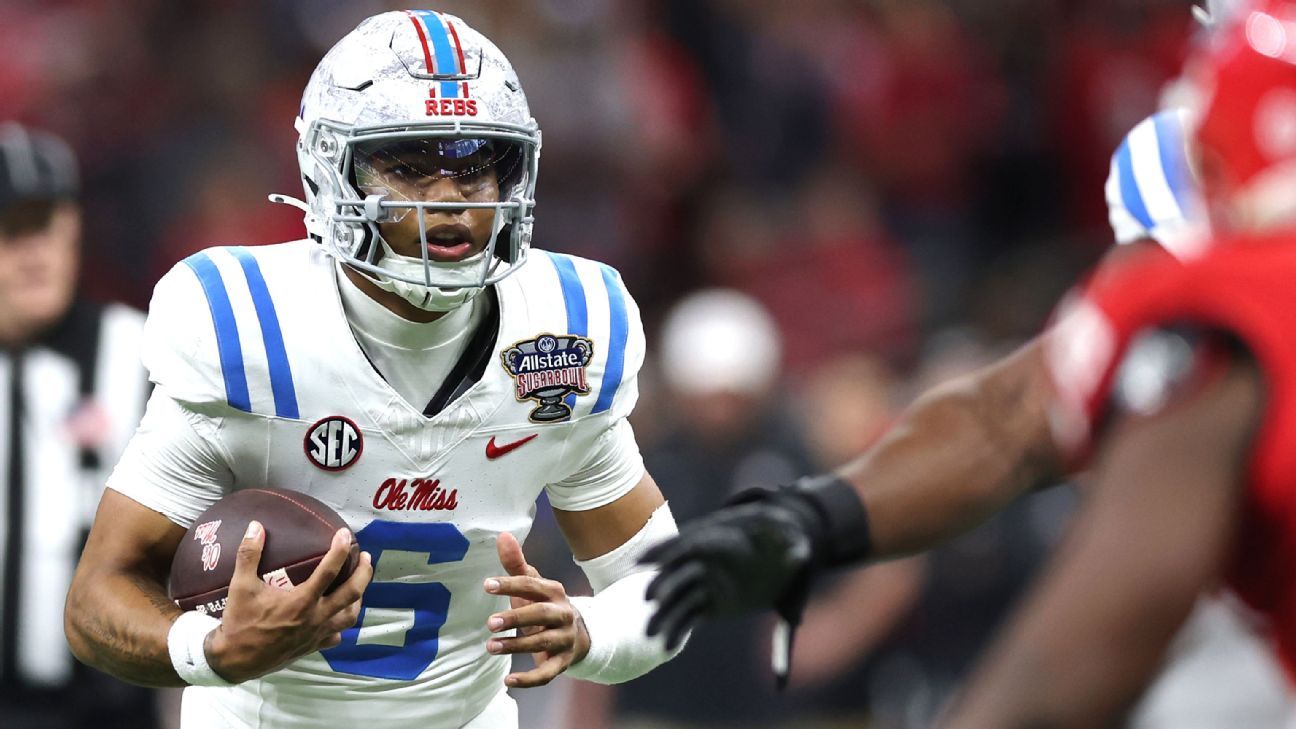
The Arizona Cardinals selected Nkemdiche, the defensive tackle from Ole Miss, with the 29th pick. In his five-year career, Nkemdiche played in just 38 games, recording 4.5 sacks, two forced fumbles, one fumble recovery and one touchdown.
In 10 seasons, Jones has become one of the franchise's greatest players -- a three-time Super Bowl champion, a seven-time Pro Bowler and six-time All-Pro. He has also become the leader of the Chiefs defense and a beloved teammate. With three sacks in the upcoming season, Jones (who has 87.5 in his career) will become second in the franchise's history in that category, behind Hall of Fame outside linebacker Derrick Thomas (126.5). It's a safe bet, considering Jones has never had fewer than five in a season.
"I'm grateful, man -- I'm so grateful -- just to be in the Chiefs organization," Jones said. "I didn't think I had a chance of going to Kansas City."
The path that led the Chiefs to Jones began with one person: Nutt.
In 2016, Nutt's priority was to evaluate college players in the Southeast. The more Nutt was able to learn about Jones -- an unusual athlete at his position, listed then at 6-foot-6 and 310 pounds -- the more he was intrigued by the prospect's pass-rushing potential. Within the history of the Chiefs' dynastic run, the relationship between Nutt and Jones was one of the major catalysts for the Chiefs to make an important trade, setting up the franchise to execute its greatest one -- moving up 17 spots to select quarterback Patrick Mahomes -- a year later.
Oftentimes in most draft rooms, discussions about a player, or a group of players, does not lead to a memorable argument. But Nutt, a scout who had plenty of conviction in his work, was not afraid to compellingly advocate for Jones.
"I watched all of their tape," Nutt said to the group, referencing Jones and Nkemdiche. "I've done both. This is the better player."
Nutt pointed to Jones.
GROWING UP IN Houston, Mississippi, Jones was a late bloomer.
He didn't take football seriously until his junior year of high school, when he quickly gained the attention of major college programs as a three-star recruit. Known more for his basketball skills, Jones used to describe himself as a combination of Los Angeles Lakers superstar LeBron James and former NBA guard Rajon Rondo. Jones averaged 14.8 points as a junior at Houston High. Those basketball skills, though, eventually helped Jones realize that his rare mixture of athleticism, quickness and strength made him a fearsome defender in the trenches.
At Mississippi State, Jones began the 2015 season with dominant moments in games against Southern Miss, LSU and Texas A&M. Some plays featured Jones in the backfield before the quarterback or running back could make a decision.
When Nutt began focusing on Jones early that season, he noticed what other scouts observed, too: Jones, despite his talent, was far too inconsistent.
"There was some immaturity," Nutt said. "These kids are young, man. You [can't] forget that. Chris was a [true] junior when he came out.
"It was just the tape at times. Why didn't you dominate every single play? There were flashes. There were plays where he's standing up tall and he's taking plays off. Or he's swimming and playing undisciplined to [try to] get sacks and outside the [structure of] the scheme."
The final six games of Jones' college career, Nutt said, showcased a noticeable jump. Mississippi State won four of those games and Jones created more and more highlights. In that stretch, he had 16 tackles, four tackles for loss, one sack and three pass deflections. In one of his scouting reports, Nutt compared Jones' arms to that of an octopus. Jones' improved power and pass-rushing skills overwhelmed interior linemen.
The looming issue became if Jones, considering his above-average height, could play with proper pad level more often to create an even greater leverage advantage.
"Is this a push, just because you know you're leaving now?" Nutt said of what he was thinking back then. "As a scout, you have to say, 'Am I going to get the late tape all the time or am I going to get this early stuff, where half the time it's good and half the time it's average?
"I had an initial grade and then my late grade. I bumped it up."
In the four months between the end of Mississippi State's season and the draft, much of the evaluation for the Chiefs about Jones was distilled into a single question: Will he reach his potential?
The team went through a similar process with tight end Travis Kelce. In 2013, Kelce was selected in the third round, partly because he too showed immaturity at times and was also kicked off the team for the 2010 season during his college career at Cincinnati for smoking marijuana. The Chiefs gambled on Kelce because of his dynamic speed as a pass catcher for his size at 6-5 and 250 pounds. In his third season, Kelce earned his first Pro Bowl honor after recording 72 receptions for 875 yards and five touchdowns.
Nutt felt Jones could have a similar trajectory.
"I think everyone underestimated the dawg and the competitor inside that kid," Nutt said of Kelce. "He exceeded everyone's expectations.
"Chris is driven to win, but he's driven to prove people wrong, too."
THE CHIEFS INTERVIEWED Jones at the combine, and the group recognized that his personality -- featuring head-tilting, booming laughs -- was indelible.
"He was a fun guy, a little goofy," Nutt said. "When he left, we were like, 'We've got to do some work on him.'"
Neither party could've anticipated what happened next at the event. Jones was eager to display just how good of an athlete he was through several drills. But in an effort to make himself stand out, Jones made a mistake, one that always makes him laugh.
"Everybody was wearing the f---ing long tights," Jones said on a 2023 episode of the "New Heights" podcast that is hosted by Kelce and his brother, Jason. Jones added: "I was like, 'You know what, I'm not going out there copying everybody. I'm going to wear the short tights.'
"I didn't realize they were boxers, bro."
Two weeks later, Nutt attended Jones' pro day at Mississippi State. With another chance to observe him up close, Nutt was impressed with how Jones performed better than he did at Indianapolis, including improving his vertical jump from 24.5 inches to 29.5 inches. Jones that day had no problem finishing each drill with full intensity.
The more important moment was after the pro day when Nutt interviewed Jones again. This time, though, Nutt wanted to see how Jones responded to fair criticism of his college film.
"The look in his eyes, just the competitor inside that I didn't even know just watching the tape," Nutt said. "You don't really know until you talk with somebody.
"I was like 'All right.' I remember calling Coach Reid and Brett was in there, too. Brett put it on speaker phone. My message was, 'I'm alright with this kid. He's going to prove people wrong.'"
Jones, however, wasn't convinced the Chiefs were all that allured with him. Much of his contact with the Chiefs before the draft was with Nutt. Other teams, such as the Cleveland Browns and the Jacksonville Jaguars, showed far more interest. Those teams hosted him for a predraft workout and interviews. In fact, Jones believed he left a good impression with Jaguars owner Shad Khan.
The Chiefs didn't host Jones at their training facility before the draft, which was a rarity at the time for a prospect they might consider acquiring with a high draft pick.
Just before the draft -- and before all the scouts were required to return to Kansas City to be in the Chiefs' draft room -- Jones agreed to have dinner at a restaurant in his hometown with Nutt.
"I ordered two pineapple steaks," Jones said. "He asked me -- [and] I'll never forget it -- why do you think the Chiefs should draft you? At the time, I was like, 'It'll be the best decision they ever made.'"
DORSEY'S INITIAL PLAN for the draft -- the one in which the Chiefs could've taken their biggest swing -- was to not use the team's first-round pick on a defensive lineman.
Instead, Dorsey was hoping to land a new quarterback for Reid, a homegrown gunslinger who could develop under veteran starter Alex Smith. In 2015, Smith led the Chiefs to their first playoff victory in 22 years, finishing the regular season with 3,486 passing yards, 20 touchdowns and seven interceptions. The Chiefs also knew Smith, as a 10-year veteran, would have his 32nd birthday a week after the 2016 draft.
The prospect who fascinated Dorsey was Memphis quarterback Paxton Lynch, who offered quality mobility while being listed at 6-7.
"One trade that didn't happen saved the Kansas City Chiefs franchise," ESPN senior draft analyst Mel Kiper Jr. said in 2024 on ESPN 1000 radio in Chicago. Kiper added: "Kansas City tried to trade up to get Paxton Lynch. They failed. Denver got him. Because of not being able to trade up, they traded down and took Chris Jones. The next year, they took Patrick Mahomes.
"My point being, had they been successful in doing the deal they wanted to do, and got Paxton Lynch, they wouldn't have Chris Jones, and they wouldn't have Patrick Mahomes."
One reason the Chiefs couldn't succeed in trading for Lynch is because they didn't have their own third-round pick that year.
Less than two months before the draft, the NFL stripped the Chiefs of two picks -- a 2016 third-round selection and a 2017 sixth-round pick -- for violating the league's anti-tampering policy, the by-product of them having improper contact with receiver Jeremy Maclin before the start of the free agent signing period. The NFL also fined the Chiefs $250,000, Reid $75,000 and Dorsey $25,000. Although Maclin signed with the Chiefs and had previously played for Reid during four seasons with the Philadelphia Eagles, the league ruled the team contacted him directly instead of his agent during the negotiating window.
The Chiefs weren't the only team trying to trade up for Lynch. The Dallas Cowboys -- who later selected quarterback Dak Prescott with the 135th pick -- offered their second- and fourth-round picks (Nos. 34, 101) to the Seattle Seahawks for the 26th selection. The Chiefs offered their first- and fourth-round picks (Nos. 28, 126).
The Broncos, however, outbid the Chiefs and Cowboys, acquiring the 26th pick -- and selecting Lynch -- in exchange for their first- and third-round picks (Nos. 31, 94).
As best as he could that night after the first round, Dorsey denied that Lynch being taken off the board didn't trigger the Chiefs' desire to trade down.
"I know [fans are] a little frustrated because you don't get a first-round pick, but I think the draft is a three-day process," Dorsey said that night. He later added of Lynch as a Bronco: "He's a fine football player. You've got to line up and play against somebody. They choose to come up and do their thing."
But as soon as Lynch was selected, the Chiefs' pivoted, letting several teams know the 28th pick was available. The 49ers consummated their deal with the Chiefs by sending their second-, fourth- and sixth-round picks (Nos. 37, 105, 178) in exchange for Kansas City's first- and sixth-round picks (Nos. 28, 249).
With the 28th pick, the 49ers selected Stanford right guard Joshua Garnett, who played in just 25 games in three years. With the Broncos, Lynch played in just five games in two seasons.
When the Chiefs were on the clock, Dorsey and Reid trusted Nutt's assessment of Jones.
"We felt, after analyzing that board, if we were to go back a little bit, there's still a high probability we could acquire [Jones]," Dorsey said after the second round. "This is a really good player. These types of guys don't come around that often. I'm willing to invest in that type of player because I believe in his skill set and what he is going to develop into.
"For a man his size, he's uniquely gifted."
In Chicago's Auditorium Theatre, Jones watched the draft's first round in the green room behind the stage inside Radio City Music Hall as he went undrafted on Day 1. Full of worry about his future, and disappointed about the previous night, Jones began crying once he hugged his parents after he heard former Chiefs fullback Tony Richardson announce his name. Once he reached the stage, Jones started dancing and pumping his fists in front of cheering fans.
Jones' tears began again when he bear-hugged NFL commissioner Roger Goodell, the embrace lasting eight seconds.
"I see Roger and I'm like, 'Man, give me a hug, please,'" Jones said on the podcast. "It was a good feeling."
Jones' reaction led to the men inside the Chiefs' draft room producing a crescendo of cheers and laughter. In the corner of the draft room was Nutt, who smiled at the TV.
"It was a dream come true," Nutt said. He added of Jones' emotions: "It was good to see, though, that he cared that much."
LESS THAN AN hour after Super Bowl LVII -- one of the greatest moments in his career, following the Chiefs' comeback win over the Philadelphia Eagles -- Jones was still in his white and red uniform when he reflected on the start of his NFL career. Donning a crisp commemorative ball cap, too, Jones thanked God for his achievements.
"Without Him, I don't know where I'd be," Jones said. "I'm just a kid from Houston, Mississippi, coming out of Mississippi State."
The person Jones mentioned next was Nutt, the scout who believed in him.
Throughout his career, Jones has always given credit to Nutt, who he said was an instrumental part of what inspired him to maximize his opportunity with the Chiefs.
"Listen, Chris is a loyal dude," Nutt said. "If he feels like you got his back -- and his agent must have told him some stuff -- he keeps doing it. The guy is appreciative, and I respect him.
"He's helped my career, too. When you stand on the table for a player and he ends up being a really good player, that gives you some credibility in the [draft] room. That allows you to move up, too, [in the front office], so shout out to Chris Jones."
Similar to Kelce, Jones' career began to blossom in Year 3. In 2018, Jones led the Chiefs with 15.5 sacks, 29 quarterback hits, two forced fumbles and an interception that he returned for a 20-yard touchdown.
In the Chiefs' three Super Bowl victories, Jones' role in the dynasty was as the team's closer, the defender who almost single-handedly ended critical drives for opposing offenses. He has used his basketball skills to record 11 pass deflections and 21 quarterback hits in 22 career postseason games. Often requiring the assignment from two interior offensive linemen, Jones evolved as a pass rusher, too, collecting sacks by also winning one-on-one matchups on the edge.
One of Kelce's favorite teammates is Jones. On the Chiefs' final defensive snap of the 2023 season -- in overtime of Super Bowl LVIII -- Jones pressured 49ers quarterback Brock Purdy into throwing an incompletion during a third down inside the red zone. It forced the 49ers to settle for a field goal, and Jones and the rest of the defense set up the offense, led by Mahomes and Kelce, to have a game-winning touchdown drive.
After the game, Kelce expressed his gratitude to Jones while the two men hugged for eight seconds, a scene that was captured by NFL Films.
"Way to f---ing believe, dawg!" Kelce said to Jones. "Way to lead us, dawg. You're the greatest to ever do it in my eyes, baby. Ever to do it, dawg."
Jones responded with three words: "I love you."
Even though the Chiefs and Jones experienced some turbulent moments in their partnership -- such as when he was franchise tagged in 2020, when he held out for months in 2023 and almost made it to free agency in 2024 -- he expressed loyalty to the franchise, even making a declaration.
"I'm a [Chief] for life," he wrote on his X account three years ago. "I will not play for another franchise."
Years ago, members of the Chiefs' front office went over the success rate of their predraft process from previous years. When rediscussing Jones and the 2016 draft, the group agreed about one quibble.
"You almost wish we would've [taken] him in the first round because then you get the extra year [on the rookie contract]," Nutt said of Jones. "That would've helped. We were kicking ourselves. We were like, 'Yeah, we should've just taken him in the first round.' That extra pick, was that worth it?"
One thing Nutt was sure about was the outcome of the debate about Nkemdiche and Jones.
"One is out of the league," Nutt said, "and one is going to be a Hall of Famer."
ESPN NFL Nation reporter Todd Archer contributed to this report.