
Myron MedcalfFeb 9, 2026, 06:49 PM ET
- Covers college basketball
- Joined ESPN.com in 2011
- Graduate of Minnesota State University, Mankato
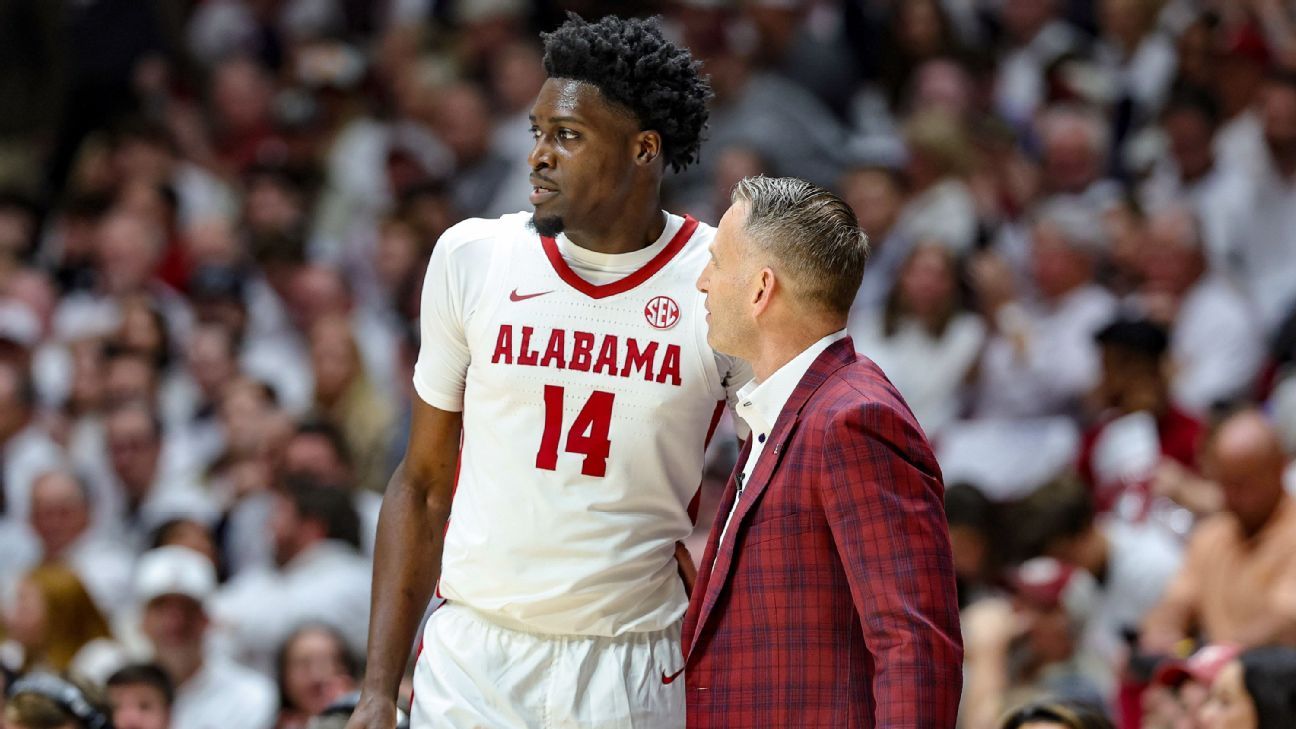
Alabama basketball player Charles Bediako's college career is over again after an Alabama judge denied his motion for a preliminary injunction on Monday, ending the 7-footer center's season with the Crimson Tide.
Judge Daniel F. Pruet ended Bediako's bid to regain eligibility despite leaving Alabama for the NBA draft in 2023, signing a two-way NBA contract and playing the last three seasons in the G League.
Pruet ruled that Bediako did not have a "reasonable expectation" that he would be allowed to return to college basketball when no other player had been granted eligibility under the same circumstances.
Bediako, who averaged 10.0 points and 4.6 rebounds in five games with Alabama this season, was given a first-of-its-kind second chance to play college basketball last month after another judge granted him a temporary restraining order.
That ruling allowed him to join Alabama in the middle of the season -- three years after he'd been a defensive anchor for a team that boasted a top-three defense in 2022-23, which was Bediako's second and final season with the team before he entered the 2023 NBA draft.
In Monday's ruling, Pruet ruled that Bediako had failed to meet the criteria for a preliminary injunction that would have allowed him to play the rest of the 2025-26 season because he had "failed to establish that he would suffer irreparable harm," he had "failed to establish that he has no adequate remedy at law without the issuance of the injunction" and he had also "failed to demonstrate that he has at least a reasonable chance of success on the ultimate merits of those claims" that the NCAA had violated antitrust laws in his case.
The judge also said the case is "not about whether the Plaintiff can be paid to play basketball, but for whom," citing the money he made at the professional level, after Bediako claimed he would miss out on revenue-sharing opportunities if he wasn't given a chance to return to college basketball.
The judge also ruled that Bediako is subject to NCAA rules.
"To obtain the benefits promised to him for participation in NCAA basketball, the Plaintiff must be eligible to participate in NCAA basketball," the judge said. "Eligility to participate in the NCAA is controlled by the Defendant's application of the eligibility rules legislated by the NCAA membership."
The ruling is a significant victory for the NCAA.
After multiple European prospects who'd played professional basketball had been granted eligibility, other players with ties to American pro teams began to seek similar opportunities. Multiple G-League players and James Nnaji, a 2023 NBA draft pick, were deemed eligible by the NCAA this season. But the NCAA fought Bediako's case for fear that his renewed eligibility would open the floodgates to allow other athletes with NBA experience to return to college basketball and skirt NCAA rules.
"Common sense won a round today. The court saw this for what it is: an attempt by professionals to pivot back to college and crowd out the next generation of students," NCAA president Charlie Baker said in a statement. "College sports are for students, not for people who already walked away to go pro and now want to hit the 'undo' button at the expense of a teenager's dream. While we're glad the court upheld the rules our members actually want, one win doesn't fix the national mess of state laws. It's time for Congress to stop watching from the sidelines and help us provide some actual stability."
Bediako's agent, Daniel Green, did not immediately respond to a request for comment.
The Associated Press contributed to this report.